Burger temperatures confuse people because two different conversations share the same words. One is about safety: ground beef is not a steak, and it needs a higher internal temperature. The other is about taste: how the cook on the patty, the fat in the grind, and the build around it decide whether the burger eats juicy or dry. Sorting the two makes you better at ordering and better at grilling at home.
This guide uses the standard published temperatures, explains why ground beef plays by different rules than a whole cut, and then gets to the part restaurants actually control: the build.
Why ground beef is different
On a whole steak, bacteria live on the surface, and searing handles them, which is why a rare steak is a normal order. Grinding mixes that surface through the whole patty, so the interior needs to reach a safe temperature too. That is the entire logic behind the higher number for burgers, and it is why a kitchen takes a medium-rare burger request for ground beef seriously rather than casually.
Quality and freshness tighten the risk but do not erase the logic. A restaurant that grinds in-house from whole cuts starts cleaner than one using pre-ground product of unknown age, and many diners order accordingly. At home, the same rule applies, plus one more: grind or buy the same day when you can.
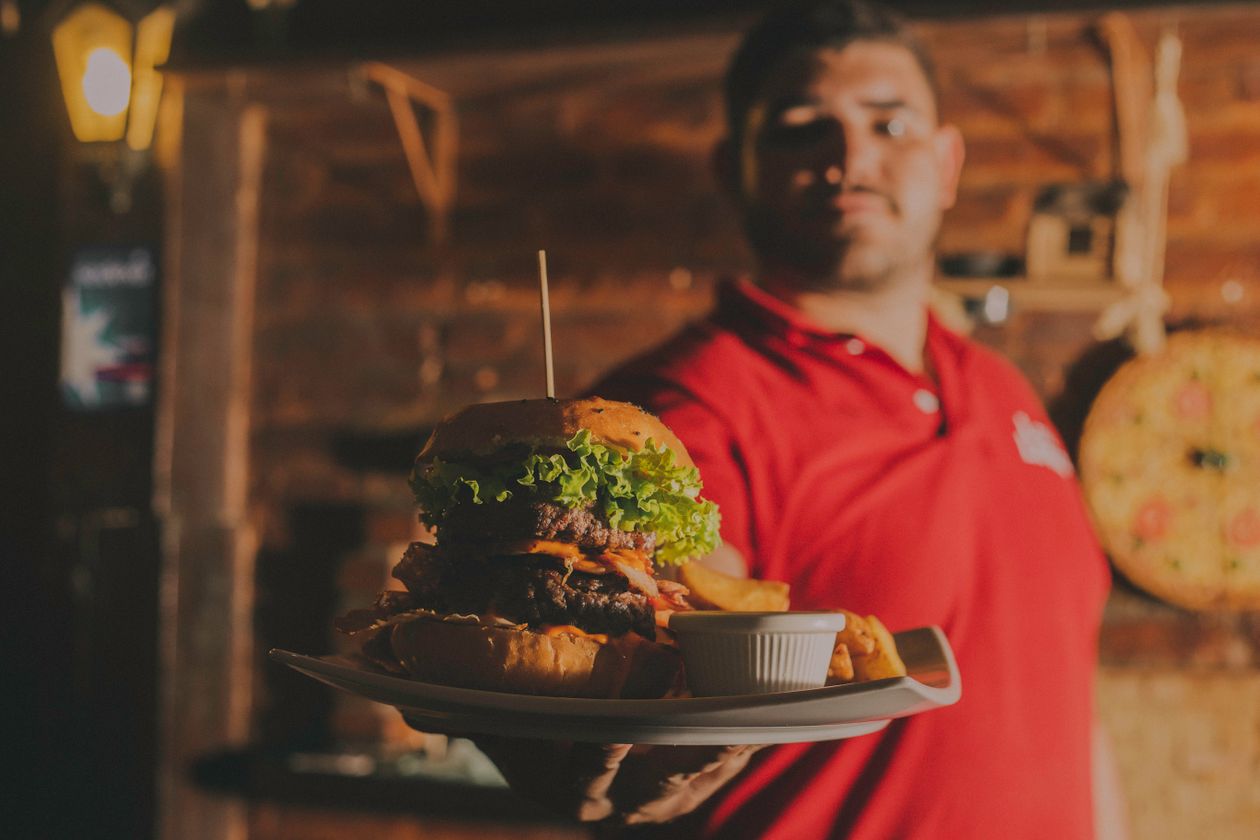
Where juicy actually comes from
Fat ratio is the first lever. A very lean grind eats dry at a safe temperature; an 80/20 grind stays juicy because fat carries moisture through cooking. The second lever is handling: patties mixed and pressed hard turn dense, while a loose pack stays tender. The third is the build. Cheese, sauces, pickles, slaw, and a toasted bun are not decoration on a well-cooked burger. They are how a kitchen returns richness and moisture around a patty cooked to a safe temperature.
Read a menu with that in mind. The Carolina Burger at Franklin Court Grille, with bacon, pulled pork, coleslaw, cheese, pickles, and barbecue sauce on a fresh-ground brisket patty, is a build designed to eat juicy at a full cook. That is not an accident. It is the correct engineering answer to the temperature rule.
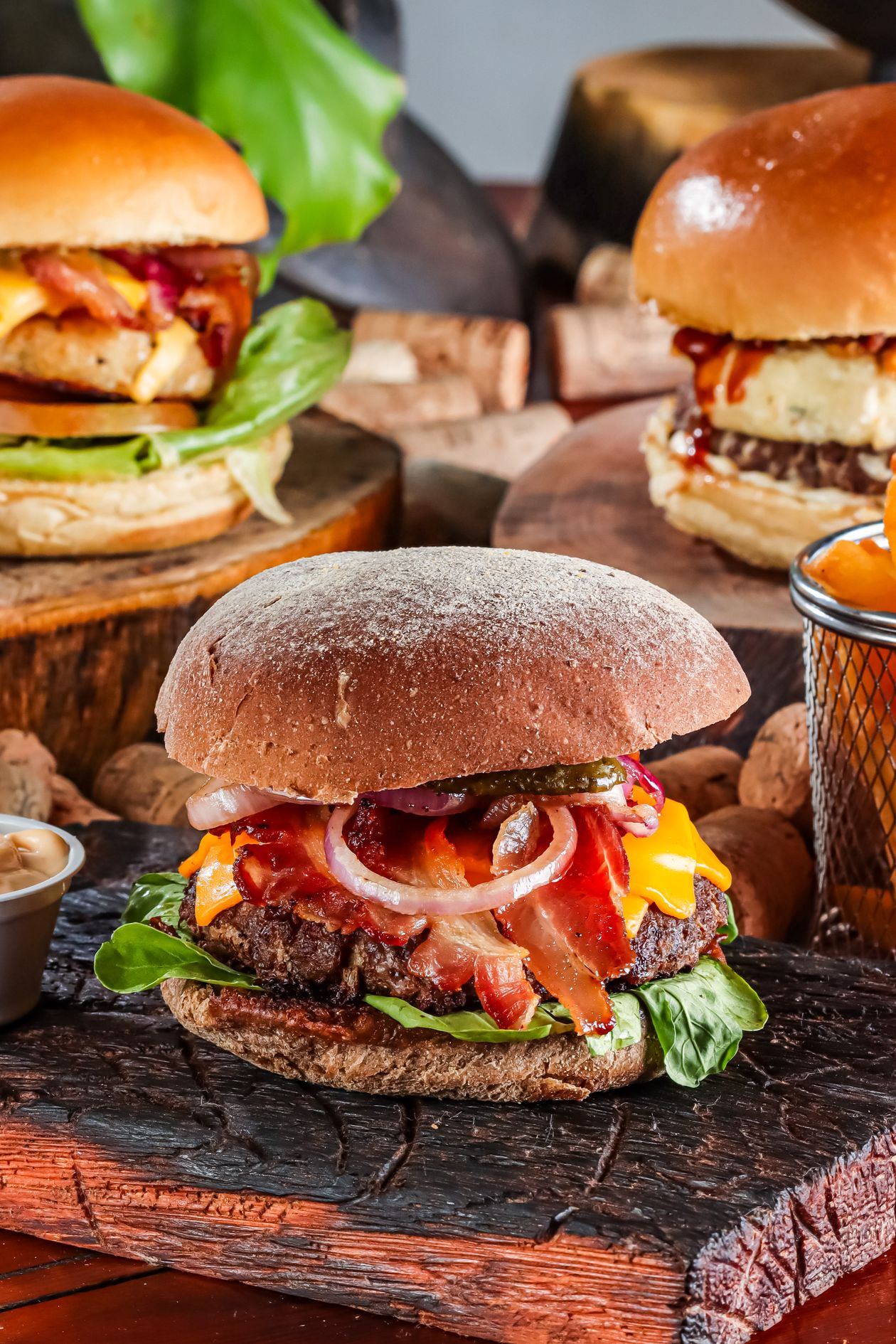
A word on toppings that change the math
Some builds shift a burger's eating temperature experience without changing its safety at all. A cold slaw, fresh tomato, and crisp lettuce cool each bite. Melted cheese and hot pulled pork push the other way. Fried eggs and sauteed mushrooms add richness that reads as juiciness. When you build your own burger at a grill, you are quietly engineering the same balance the signature builds ship with, so copy the logic: one rich element, one fresh element, one sharp element like pickles or onion. That triangle covers for a leaner patty and flatters a fatty one, and it works at home on a backyard grill in Monroe exactly as it does in a restaurant kitchen.
Thickness matters as much as temperature. A thin smash-style patty cooks through in moments and leans on crust for its pleasure. A thick pub patty needs even heat and a rest, and punishes impatience with a cold center or a grey exterior. When a menu offers both styles, order the temperature language that fits the build: doneness words mean more on a thick patty, while thin patties are best judged done or not done at all.
Ordering without the argument
Order the temperature you like, accept the kitchen's answer on ground beef, and judge the burger on juiciness and flavor rather than color alone. A safely cooked burger can show a blush from smoked meats and certain ingredients in the build, and a grey burger can still be dry if the grind was lean. The thermometer settles safety; your first bite settles the rest.
Common questions
Why do restaurants ask how I want my burger cooked if there is a safe temperature?
Because within the safe range there is still room for preference on crust, cook, and build, and some kitchens use whole-muscle grinds they handle under strict routines. The question is normal; so is a kitchen explaining its limits.
What grind makes the juiciest home burger?
An 80/20 ground chuck or brisket blend is the standard answer. Leaner grinds dry out at safe temperatures, and fattier blends shrink and flare on the grill.
Does resting a burger really matter?
Yes. Three to five minutes lets juices redistribute instead of running onto the plate at the first bite. Tent it loosely and build the bun and toppings while you wait.
Photos in this guide are representative stock images.
← All guides from Franklin Court Grille← Back to Franklin Court Grille